
Best Purple Sweet Potato Sourdough Bread (Stunning & Delicious)
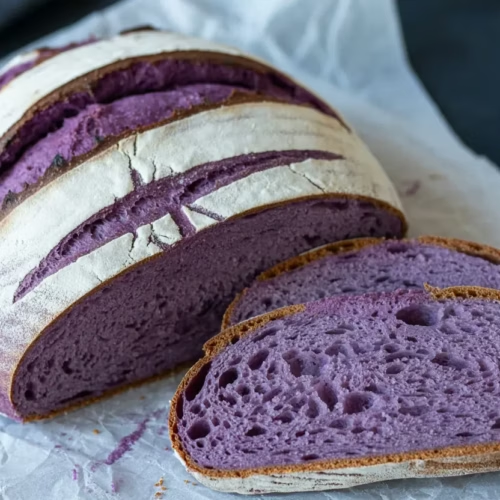
Imagine pulling a loaf from the oven that stops everyone in their tracks, not just because of the incredible aroma, but because of its deep, jewel-toned violet crumb. This Purple Sweet Potato Sourdough Bread is exactly that kind of showstopper. Earthy, subtly sweet, and wrapped in a crackling sourdough crust, it’s the kind of bread that makes people ask, “Wait, how did you make that?” Whether you’ve been baking sourdough for years or you’re just getting comfortable with your starter, this loaf will become a proud staple in your kitchen rotation.
The magic here comes from the roasted purple sweet potato, which does double duty as both a natural food coloring and a flavor enhancer. It keeps the crumb moist for days and adds a gentle sweetness that pairs beautifully with that signature sourdough tang. If you’ve ever been curious about ube sourdough bread or wanted to explore flavored sourdough bread recipes beyond the basic country loaf, you’re in exactly the right place.
What Makes This Recipe Special
- Naturally vivid color: No artificial dye needed. The purple sweet potato (often labeled as purple yam bread recipe inspiration) delivers that gorgeous violet hue completely on its own.
- Complex, balanced flavor: You get the lactic tang of a long fermentation alongside a gentle, vegetal sweetness. Think of it as a sweet sourdough with serious depth.
- Incredible crumb and crust: The added starch from the potato contributes to an open, tender crumb and a crust that shatters satisfyingly when sliced.
- Surprisingly approachable: Despite its dramatic appearance, the technique follows a classic sourdough method, making it accessible to home bakers of all levels.
Essential Ingredients
- Active sourdough starter: Fed 6 to 8 hours before baking and bubbly at peak activity. This is the heart of your sweet potato sourdough.
- Purple sweet potato: About 200g roasted and mashed. Look for Okinawan sweet potatoes or purple Stokes sweet potatoes at Asian grocery stores or farmers markets.
- Bread flour: 400g. The high protein content builds the gluten structure needed to support the moisture from the potato.
- Whole wheat flour: 50g. Adds nuttiness and feeds the starter for a more active fermentation.
- Water: 300g at room temperature, adjusted slightly based on the hydration of your potato mash.
- Fine sea salt: 10g. Added after autolyse to control fermentation timing.
- Honey: 1 tablespoon, optional. Deepens the sweetness and helps with browning.
Using quality equipment and fresh ingredients makes a real difference in sourdough baking, especially when working with a specialty loaf like this one. From your Dutch oven to your kitchen scale, the right tools make every step more precise and enjoyable.
Here’s the complete recipe:
Purple Sweet Potato Sourdough Bread
Equipment
- Dutch oven (5-quart or larger)
- Kitchen scale
- Large mixing bowl
- Bench scraper
- Banneton proofing basket or bowl with kitchen towel
- Bread lame or sharp razor blade
- Wire cooling rack
- Parchment paper
Ingredients
- 200 g purple sweet potato roasted and mashed smooth, cooled completely
- 400 g bread flour plus more for dusting
- 50 g whole wheat flour
- 300 g room temperature water divided: 280g for autolyse, 20g reserved
- 100 g active sourdough starter fed 6 to 8 hours prior, at peak activity
- 10 g fine sea salt
- 1 tablespoon honey optional, for added sweetness and browning
Instructions
- Roast the purple sweet potato: Pierce a medium purple sweet potato all over with a fork and roast at 400°F (200°C) for 45 to 55 minutes until completely tender when pierced. Let cool fully, then peel and mash until completely smooth. Spread on a plate and microwave in 30-second bursts to remove excess moisture if the mash seems wet. Weigh out 200g and set aside.
- Autolyse the dough: In a large mixing bowl, combine the bread flour, whole wheat flour, 280g of the water, and all 200g of the mashed purple sweet potato. Mix with your hands or a stiff spatula until no dry flour remains and the potato is evenly distributed. The dough will look rough. Cover the bowl and rest for 45 minutes at room temperature.
- Incorporate starter and salt: Add the active sourdough starter to the dough and use wet hands to squeeze and fold it in until fully absorbed, about 3 minutes. Sprinkle the fine sea salt evenly over the dough, add the remaining 20g of water (and honey if using), and continue squeezing and folding until everything is fully integrated and the dough feels cohesive, about 3 to 5 more minutes.
- Bulk fermentation with stretch and folds: Cover the bowl and begin bulk fermentation at room temperature, ideally 75 to 78°F (24 to 26°C). During the first 2 hours, perform a set of stretch and folds every 30 minutes for a total of 4 sets. For each set, grab one side of the dough, stretch it up, and fold it over the center, rotating the bowl 90 degrees and repeating 4 times per set. After the 4 sets, leave the dough undisturbed for another 2 to 3 hours until it has grown 50 to 75 percent in volume and appears domed and jiggly when the bowl is gently shaken.
- Shape the loaf: Gently turn the fermented dough onto a clean, unfloured surface. Using a bench scraper and your hands, shape the dough into a tight boule (round) or batard (oval) by pulling it toward you across the surface to build tension. The surface should feel taut. Place the shaped dough seam-side up into a well-floured banneton or a bowl lined with a generously floured kitchen towel, using rice flour if available to prevent sticking.
- Cold proof: Cover the banneton with a reusable plastic cover or shower cap and refrigerate for 10 to 16 hours. The dough should rest cold overnight. This slow cold proof develops flavor depth and makes the dough much easier to score cleanly the next day.
- Preheat oven and Dutch oven: Place your Dutch oven (lid on) inside the oven and preheat to 500°F (260°C) for at least 45 minutes. You want the Dutch oven thoroughly saturated with heat before the dough goes in.
- Score and bake covered: Cut a piece of parchment paper to fit your Dutch oven. Remove the cold dough from the refrigerator and turn it out onto the parchment, seam-side down. Using a bread lame or a sharp razor blade, score the dough with one confident slash at a 30 to 45 degree angle, or add a decorative pattern. Carefully lower the dough on parchment into the hot Dutch oven. Place the lid on and bake at 500°F (260°C) for 20 minutes. The steam trapped inside creates an excellent crust and maximum oven spring.
- Bake uncovered: Remove the lid, reduce the oven temperature to 450°F (230°C), and continue baking for 20 to 25 minutes until the crust is a deep golden brown and the internal temperature of the loaf reads 205°F (96°C) on an instant-read thermometer. The loaf should sound hollow when tapped on the bottom.
- Cool completely: Carefully lift the loaf out of the Dutch oven using the parchment paper and transfer it to a wire cooling rack. Allow the bread to cool for a minimum of 1.5 to 2 hours before slicing. Cutting too early will result in a gummy, undercooked-seeming crumb as the internal steam needs time to redistribute and set the structure. Slice and enjoy.
Notes
Make It Your Own
- Ube extract boost: Add half a teaspoon of ube extract alongside the mashed potato to intensify both flavor and color, transforming this into a more pronounced ube sourdough bread with a sweeter, vanilla-adjacent aroma.
- Lavender infusion: Steep a teaspoon of dried culinary lavender in the warm water before mixing for a floral note that complements the potato beautifully, giving nods to the trending lavender sourdough bread style.
- Hawaiian-inspired loaf: Fold in a tablespoon of coconut milk powder and a touch of brown sugar to create something reminiscent of Purple Hawaiian Bread, soft, enriched, and gently sweet.
- Seeded crust: Roll the shaped loaf in black sesame seeds or white poppy seeds before its final proof for added texture and a striking visual contrast against the purple interior.
How to Make Purple Sweet Potato Sourdough Bread
- Roast and mash your potato: Pierce a medium purple sweet potato all over, roast at 400°F (200°C) for 45 to 55 minutes until completely tender. Cool fully, peel, and mash until smooth with no lumps. Measure out 200g.
- Mix the dough (autolyse): Combine bread flour, whole wheat flour, 280g of the water, and the mashed purple sweet potato in a large bowl. Mix until no dry flour remains. Cover and rest for 45 minutes. This allows gluten to develop without kneading and helps the potato integrate fully.
- Add starter and salt: After autolyse, add your active starter and dissolve it into the dough using wet hands. Sprinkle in the salt and remaining 20g of water (plus honey if using). Squeeze and fold the dough repeatedly until everything is fully incorporated, about 5 minutes.
- Bulk fermentation with stretch and folds: Cover the bowl and begin bulk fermentation at room temperature (75 to 78°F is ideal). During the first 2 hours, perform a set of stretch and folds every 30 minutes, 4 sets total. Then leave undisturbed for another 2 to 3 hours until the dough has grown 50 to 75 percent and feels airy and domed.
- Shape the loaf: Turn the dough onto an unfloured surface and shape it into a tight boule or batard using a bench scraper. Surface tension is key. Place seam-side up into a well-floured banneton or a bowl lined with a floured kitchen towel.
- Cold proof overnight: Cover with plastic wrap or a shower cap and refrigerate for 10 to 16 hours. This slow fermentation deepens flavor and makes the dough easier to score.
- Bake in a Dutch oven: Preheat your oven with a Dutch oven inside to 500°F (260°C) for at least 45 minutes. Turn the cold dough onto parchment, score it with a lame or sharp razor in one confident slash or a decorative pattern. Bake covered for 20 minutes, then uncover, reduce heat to 450°F (230°C), and bake 20 to 25 minutes more until deeply golden and the internal temperature reads 205°F (96°C).
- Cool completely before slicing: Transfer to a wire rack and resist cutting for at least 1.5 to 2 hours. Cutting too early releases steam and gums up the crumb.
Expert Tips
- Dry your potato mash: Spread the mashed sweet potato on a plate and microwave in 30-second bursts to remove excess moisture before adding it to the dough. Too much water can make your dough slack and harder to shape.
- Don’t skip the cold proof: The ube sourdough bake benefits enormously from an overnight retard. It firms the dough, makes scoring cleaner, and significantly improves oven spring.
- Watch your bulk closely: Purple sweet potato adds sugars that can speed up fermentation. In a warm kitchen above 78°F, reduce bulk time by 30 to 45 minutes and watch for the dough to dome and jiggle when the bowl is shaken.
- Common mistake to avoid: Using a starter that isn’t at peak activity. If your starter hasn’t doubled and isn’t domed and bubbly, wait longer. Under-fermented starter is the number one reason sourdough doesn’t rise properly.
Serving Suggestions
- Simple and elevated: Slice thick and spread with salted cultured butter. The contrast between the rich fat and the tangy, sweet crumb is extraordinary.
- Savory pairing: Serve alongside a bowl of miso soup, roasted root vegetable soup, or a creamy white bean stew where the bread can do some serious sauce-soaking.
- Cheese board centerpiece: A few slices on a charcuterie board next to aged gouda, manchego, and honeycomb make for a visually stunning presentation that guests will photograph immediately.
- Toasted with toppings: Toast slices and top with whipped ricotta and a drizzle of honey for a breakfast that feels indulgent but comes together in minutes.
How to Store
- Room temperature: Wrap the cooled loaf tightly in beeswax wrap or store cut-side down on a wooden board, covered loosely with a clean cloth. Best consumed within 3 to 4 days.
- Refrigerating: Not recommended for whole loaves as refrigeration stales bread quickly, but pre-sliced portions stored in an airtight bag can be refrigerated for up to 5 days if you plan to toast before eating.
- Freezing: Slice the entire loaf, separate slices with parchment paper, and freeze in a zip-lock bag for up to 3 months. Pull slices directly from frozen and toast at medium heat.
- Reheating a whole loaf: Wrap in foil and warm in a 325°F (165°C) oven for 15 to 20 minutes to refresh the crust and crumb beautifully.
Frequently Asked Questions
Can I use ube powder instead of fresh purple sweet potato?
Yes. Substitute 3 tablespoons of ube powder mixed into 160g of water for the mashed potato. The flavor will be more intense and the color even more vivid, leaning more into ube sourdough territory than sweet potato.
Why did my bread lose its purple color after baking?
This is completely normal. The anthocyanins in purple sweet potato are pH-sensitive and heat-sensitive, so the color will shift from vivid purple to a more muted lavender or blue-gray. The crumb will still be beautifully colored, just more subtle than the raw dough.
Can I make this without a Dutch oven?
You can bake on a preheated baking stone with a pan of boiling water on the rack below to create steam, but a Dutch oven gives by far the best oven spring and crust development for this style of sweet potato sourdough.
How is this different from regular sourdough?
Beyond the striking appearance, the potato adds moisture and a touch of natural sweetness that softens the classic sourdough tang into something more rounded and complex. It’s still very much a sourdough in structure and technique, but the eating experience is noticeably more tender and nuanced.
Wrapping Up
This Purple Sweet Potato Sourdough Bread is one of those recipes that earns a permanent spot in your baking repertoire, not because it’s trendy, but because it genuinely delivers on every front: flavor, texture, appearance, and the deep satisfaction of pulling something truly beautiful out of your own oven. Whether you’re drawn in by the visual drama, the appeal of naturally colored flavored sourdough bread recipes, or simply the promise of an exceptionally delicious loaf, this bread will not disappoint. Bake it once, and you’ll be making it on repeat.


